
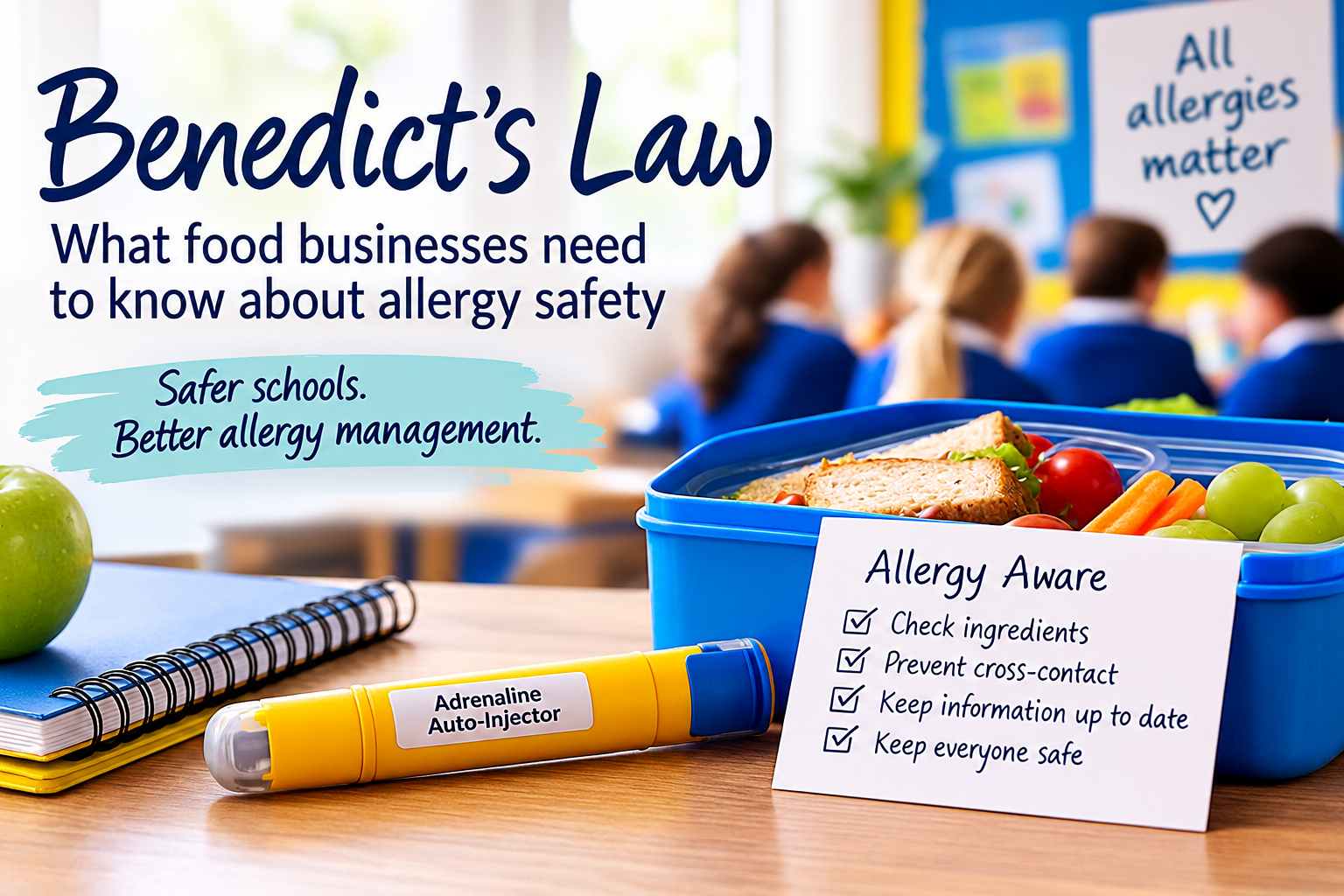
Benedict’s Law: What Food Businesses Need to Know About Allergy Safety
Allergy safety in schools has taken an important step forward with the introduction of Benedict’s Law, bringing new statutory requirements for schools in England from the 2026–27 academic year.
The law is named in memory of five-year-old Benedict Blythe, who tragically died following an allergic reaction at school in 2021. Following a campaign by his family and allergy organisations, new measures have been introduced to help make schools safer and ensure a more consistent approach to allergy management.
What does Benedict’s Law mean?
The new requirements include schools having:
- A dedicated whole-school allergy safety policy.
- Allergy awareness and emergency response training for staff.
- Spare, in-date adrenaline auto-injectors (AAIs) for emergency use.
- Individual healthcare and action plans for pupils with serious allergies.
Schools are also encouraged to create an allergy-aware environment, rather than simply relying on blanket ‘nut-free’ policies. Allergy management needs to consider the wider range of allergens and the risks associated with food, activities, trips and events.
What does this mean for food businesses?
If you provide food to schools, operate a school catering service, or supply ingredients to school caterers, effective allergen management is particularly important.
Businesses should ensure that:
- Allergen information for ingredients and menu items is accurate and up to date.
- Procedures are in place to prevent cross-contact between allergens.
- Staff understand their responsibilities when preparing and serving food for pupils with allergies.
- Any changes to ingredients, recipes or formulations are communicated promptly.
- Allergen information can be easily accessed and clearly communicated to the school or catering team.
Remember that allergen safety is not just about knowing which allergens are present. You also need effective procedures to prevent accidental contamination and ensure that the information you provide is reliable.
For food businesses working with schools, Benedict’s Law is another reminder that good allergen management is an essential part of food safety and protecting customers.
Could your allergen procedures withstand scrutiny? Make sure your staff, documentation and day-to-day practices are all working together to keep people with allergies safe.
Safety in Action helps food businesses with food safety documentation, training, consultations and practical advice. If you’re concerned about your food safety procedures or would like an expert to review them, get in touch.
Blog and image created with the help of AI.